
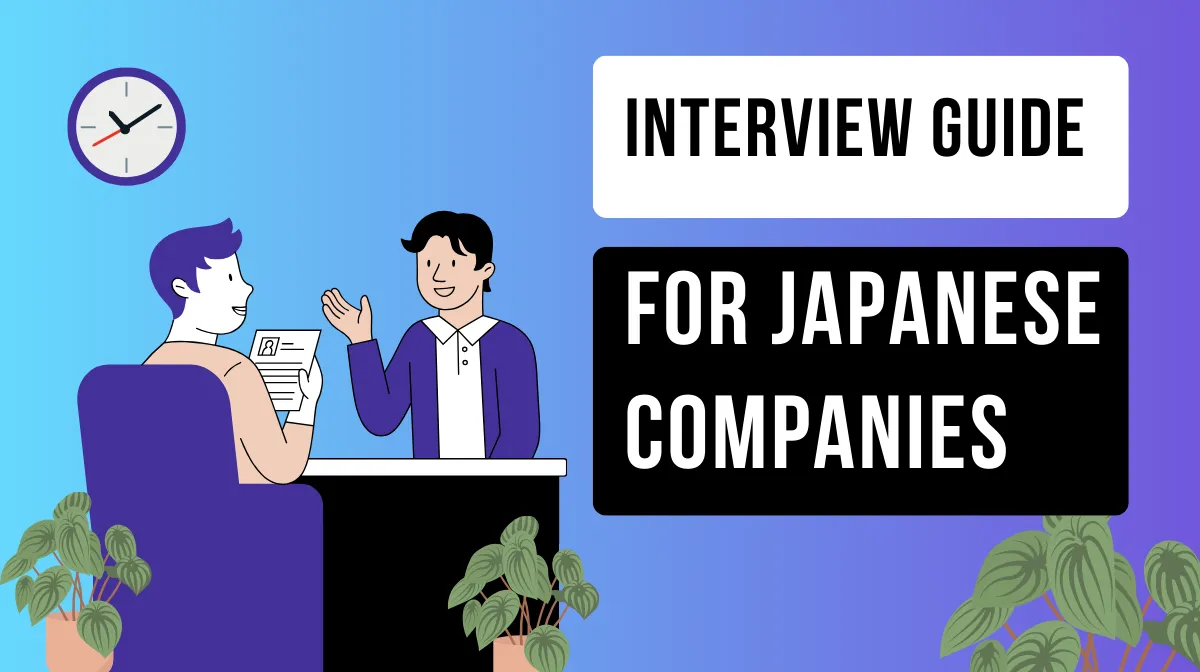
Many engineers worry about technical interviews: “What will they ask?” “What if I can’t answer?” With Japan’s engineering market facing a serious talent shortage, proper interview preparation is essential for landing your dream job.
This guide covers common questions with answer strategies, how to handle tough situations, impressive questions to ask interviewers, and a complete preparation roadmap.
- Master 30 common questions with proven strategies
- Handle tough moments using effective techniques
- Prepare systematically to maximize success rates

1. Understanding the Software Engineer Technical Interview

Technical interviews evaluate your specialized skills through in-depth discussions with engineers, engineering managers, or CTOs who assess your technical depth. Understanding what companies look for helps you prepare effectively.
What Companies Evaluate in Technical Interviews
Companies assess candidates across three critical dimensions beyond just technical knowledge.
Technical Knowledge and Practical Application
Companies value both theoretical understanding and real-world application. Rather than simply knowing React, they want to hear why you chose it and how you solved specific problems. Your sensitivity to technology trends and commitment to continuous learning indicate growth potential.
Problem-Solving and Logical Thinking
How you approach bugs or ambiguous requirements matters more than perfect answers. Companies value your ability to form hypotheses, test them, and reach optimal solutions. Your thought process and trade-off decision-making demonstrate practical engineering skills.
Communication and Team Compatibility
Can you explain technical concepts clearly to non-engineers? Your experience with pair programming, code reviews, and mentoring reveals your collaborative approach—essential skills in team development environments.
The Information-Technology Promotion Agency (IPA) defines IT professional skills across 11 categories and 7 levels in their IT Skills Standards (ITSS). Companies reference these standards when evaluating candidates. What matters most is not perfect knowledge but logical thinking and sincere engagement.
Technical Interview Purpose and Format
Technical interviews differ from HR interviews in several ways. Interviewers ask specialized questions about your technology stack, problem-solving approaches, and code design philosophy. They evaluate knowledge depth, practical application ability, and team fit through multifaceted assessment.
These interviews typically occur in the first or second round, either face-to-face or online. Some companies include coding tests. The evaluation focuses on your technical competence and collaborative potential rather than just resume credentials.
■Related Reading
Preparing for Japanese tech interviews requires understanding cultural nuances alongside technical skills. Learn essential strategies specifically designed for foreign engineers navigating Japan’s unique interview landscape.
2. 30 Common Software Engineer Technical Interview Questions by Category
Technical interview questions fall into five main categories. Understanding these patterns and preparing thoughtful responses using the STAR method (Situation, Task, Action, Result) helps you communicate logically and persuasively.
Self-Introduction and Career Questions (6 Questions)
1. Please give us a brief self-introduction [Sample Answer]
Interviewers assess first impressions, communication skills, and your ability to summarize key points.
I’ve worked as a backend engineer at a web development company for three years, primarily handling API development with PHP and Laravel. In a performance improvement project for an e-commerce site with one million monthly page views, I improved response speed by 40%.
I’m seeking opportunities to work on larger-scale services, which aligns with your technology stack and growth phase. I prioritize collaboration through code reviews and quality improvement.
2. Why are you considering a job change? [Sample Answer]
This reveals your career vision, motivation, and company compatibility.
My current company focuses on small-scale projects with limited opportunities for new technologies. I want to work with microservices architecture and cloud-native development to contribute to larger services with greater social impact. Your technology stack and growth phase align with my career goals.
3. What project has been most memorable?
Share your project overview including scale, duration, and technology stack, then explain your specific role and achievements as a cohesive story.
4. What are your strengths and weaknesses?
Prove strengths with specific episodes. For weaknesses, include improvement efforts. If you’re quick at learning technologies, show what you learned recently and the results achieved.
5. Where do you see yourself in five years?
Describe specific skills or roles like architect or tech lead, considering whether these are achievable at the company you’re applying to.
6. Why did you apply to our company? [Sample Answer]
Your product’s social significance resonates with me. The microservices migration initiatives on your technical blog and your culture of engineering autonomy are particularly attractive. My backend development experience and scalability-conscious design skills can contribute to your service growth.
Technical Knowledge and Skills Questions (6 Questions)
1. What development languages and frameworks do you regularly use?
Specify language names, versions, years of experience, and proficiency levels from basic implementation to full design-to-implementation expertise.
2. Please explain object-oriented programming
Structure your answer: definition (bundling data and processing as objects), benefits (improved reusability and maintainability), and practical examples (design using inheritance and polymorphism).
3. Explain the difference between REST API and GraphQL
Cover each characteristic (REST is resource-oriented, GraphQL is a query language), main differences (endpoint numbers, data retrieval flexibility), and selection criteria (project scale, requirements).
4. Describe your Git branching strategy
Name the strategy you’ve used (Git Flow, GitHub Flow), explain its overview, and share operational considerations from your experience.
5. Do you write test code? What kinds?
Explain specific types like unit tests, integration tests, and E2E tests, along with implementation reasons such as quality assurance and refactoring safety.
6. What technologies or tools have you been learning recently? [Sample Answer]
I’m currently learning Kubernetes to deepen my container orchestration knowledge and build scalable infrastructure skills. I’m studying fundamentals through online courses and building clusters in personal projects for hands-on verification. My goal is to reach a proficiency level suitable for production work.
Development Experience and Project Questions (6 Questions)
1. Describe your most recent project and your role [Sample Answer]
I participated in an e-commerce site renewal as a backend engineer over six months with a five-member team. I designed and implemented the product search function API, combining Elasticsearch and Redis to achieve three times faster search speed. I also led weekly code reviews, contributing to improved team-wide code quality.
2. What technology stack did you use and why?
Explain technology choices with clear reasoning including requirements fit, team technical skills, maintainability, and cost considerations. Demonstrating trade-off awareness makes a strong impression.
3. What was the most challenging aspect? [Sample Answer]
When sudden performance degradation occurred in production, identifying the cause proved difficult. Through log analysis and profiling tools, I determined the N+1 problem was responsible. Query optimization and cache strategy revision resolved the issue, teaching me the importance of performance tuning.
4. How did you handle conflicting opinions with team members?
Show your process: listening fully to understand others, discussing constructively with data and evidence, and building consensus aligned with team goals.
5. What achievements or improvements did you make?
Include specific metrics like performance improvement percentages, development time reduction, or error rate decrease to strengthen your impact story.
6. What did you learn from that project?
Address both technical learning (new tools, architecture) and soft skills (communication, project management) to demonstrate balanced growth.
Problem-Solving and Logical Thinking Questions (6 Questions)
1. How do you debug when bugs occur? [Sample Answer]
First, I accurately reproduce the issue and check error messages and logs. Then I form hypotheses like processing errors with specific inputs and verify them using debuggers or log output. After identifying the cause, I implement fixes and check for similar issues elsewhere. Finally, I add test code to prevent recurrence.
2. How do you respond to production failures?
Outline your approach: check impact scope (affected user count), implement temporary measures (rollback, cutover), investigate root causes, apply permanent fixes, and establish recurrence prevention measures.
3. How do you improve poorly performing code?
Demonstrate the cycle: measure (identify bottlenecks with profilers), hypothesize (N+1 problems, inefficient algorithms), improve (query optimization, cache introduction), and verify effectiveness.
4. How do you clarify ambiguous requirements?
Explain your flow: asking 5W1H questions for deeper understanding, presenting specific examples, aligning understanding, and documenting agreements.
5. How do you choose between multiple implementation approaches?
Clarify evaluation criteria like maintainability, performance, development speed, and team skills, then explain selection based on project circumstances.
6. Do you have experience refactoring legacy code?
Describe initiatives prioritizing test preparation for safe refactoring, gradual improvements rather than wholesale changes, and minimizing impact scope.
Teamwork and Communication Questions (6 Questions)
1. What do you value in team development? [Sample Answer]
I value transparent communication. We share progress and issues in 15-minute daily stand-ups and maintain a culture of early consultation about concerns. In code reviews, I provide technical feedback while highlighting good implementations to maintain team motivation.
2. How do you collaborate with non-engineers?
Describe avoiding technical jargon, using diagrams and mocks for visualization, and conducting regular alignment sessions.
3. What have you implemented for remote work communication?
Share specific initiatives like tool utilization (Slack, Zoom, Notion), asynchronous communication through documentation culture, and intentional casual conversations for team building.
4. Do you have experience mentoring junior developers?
Explain specific methods like pair programming, code review feedback, and creating environments where consultation feels comfortable through regular one-on-ones.
5. Have you implemented anything to improve team development efficiency?
Describe the process: identifying problems (long meetings, slow deployment), proposing solutions (creating agendas, introducing CI/CD), implementing changes, and measuring effects like 30% meeting time reduction.
6. How do you resolve conflicting opinions?
Show your approach: listening to fully understand others’ perspectives, confirming shared goals, and making data-based decisions rather than emotional ones.
■Get Expert Interview Preparation Support
Preparing for technical interviews in Japan can be challenging, especially when navigating cultural differences and language barriers. BLOOMTECH Career for Global offers personalized interview coaching and career advisory services specifically designed for foreign IT engineers.
Our bilingual advisors provide mock interviews, question preparation, and company-specific insights to help you succeed. Let us help you land your dream tech job in Japan.
▼Contact BLOOMTECH Career for Global here
3. Handling Difficult Software Engineer Technical Interview Situations
Engineer Interview: Difficult Situations
5 Critical Scenarios
Confused by Question
Unknown Technology
Incomplete Code
Feeling Nervous
Unexpected Question
Even with preparation, unexpected situations arise. Here are five common scenarios with appropriate responses. Remember that sincere responses and articulating your thought process matter more than perfect answers.
When You Don’t Understand the Question
Never remain silent when confused.
Ask: “Do I understand correctly that this is about [topic]?” or “Specifically, are you asking about [aspect]?” Paraphrasing questions demonstrates communication skills and shows you prefer accurate understanding over guessing.
When You Can’t Answer Technical Questions [Model Response]
Honesty beats pretending to know.
Respond: “I apologize, but I haven’t used that technology in production work. However, I have experience with related [technology], which I’ve applied in [specific ways]. Could you tell me more about its use cases? I’m very interested in learning”
This demonstrates self-awareness and learning motivation.
When You Can’t Complete Coding Tests in Time [Communication Approach]
Interviewers value thought process over perfect solutions.
Explain: “I didn’t complete it within the time limit, but my approach considered [methodology]. I planned to implement this section using [algorithm]. Given more time, I would optimize through [specific improvements] and add test cases for better quality.”
Articulating your thinking shows problem-solving capability even without finished code.
When Nervousness Overwhelms You
Nervousness is natural and shows you care.
Take deep breaths (inhale for 3 seconds, exhale for 5 seconds), say honestly “Could I have a moment to collect my thoughts?” or be direct with “I’m feeling nervous, so let me organize my thinking.” Interviewers understand nervousness and appreciate authenticity over forced composure.
When Asked Unexpected Questions
Stay calm and think about the question’s intent.
Start with what you know: “From [perspective], I can share that…” Connect to your experience: “In my experience, [situation] was…” Speculation is acceptable: “I believe this question relates to [context], and my approach would be…” Flexible thinking and doing your best with available information demonstrate valuable real-world engineering skills.
■Related Reading
Beyond technical interviews, mastering coding assessments is crucial for landing top positions. Discover proven strategies to excel in coding interviews with comprehensive preparation techniques and success tips.
4. 15 Impressive Questions to Ask in Your Software Engineer Technical Interview
Questions you ask interviewers aren’t just courtesy—they’re your final appeal opportunity. They demonstrate genuine interest, critical thinking, and motivation while helping you evaluate the company. Never say you have no questions.
Questions About Technology and Development Environment (5 Questions)
1. Could you explain the development team’s technology stack and selection rationale?
This shows genuine technical interest and desire to understand decision-making rather than just surface details.
2. What does the code review and testing culture look like here?
This reveals your quality consciousness and understanding of team development practices.
3. How does the team approach technical debt?
This demonstrates interest in realistic development challenges and long-term thinking beyond ideals.
4. How are decisions made about adopting new technologies?
This shows sensitivity to technology trends and signals your desire to actively propose technologies.
5. Are engineer proposals for development environment improvements welcomed?
This appeals improvement consciousness and initiative, conveying eagerness to actively contribute.
Questions About Team and Work Style (5 Questions)
1. Can you describe the team composition and roles?
This shows teamwork orientation and demonstrates you’re already imagining concrete scenarios after joining.
2. What does a typical workday look like?
This conveys seriousness about understanding actual work patterns and desire to avoid post-hire mismatches.
3. What’s the approach to remote work and flexibility?
This shows interest in modern work arrangements. Focus on how policies work in practice, not just whether they exist.
4. What career path options exist for engineers?
This demonstrates long-term career vision and interest in building a lasting relationship with the company.
5. What’s the most important mission for this position?
This reveals interest in expected contributions and eagerness to make immediate impact after joining.
Questions About Growth and Learning (5 Questions)
1. What support systems exist for technical skill development?
This shows growth motivation and demonstrates you invest actively in professional development.
2. How often do internal study groups or technical sharing sessions occur?
This reveals interest in knowledge-sharing culture and shows you value environments where mutual learning flourishes.
3. What opportunities exist to learn from senior engineers?
This demonstrates humility and willingness to actively absorb knowledge from experienced colleagues.
4. What does the onboarding process look like?
This shows motivation for early contribution and desire to integrate smoothly.
5. [Interviewer’s name], what do you find most attractive about this team?
Seeking personal opinions creates deeper dialogue, builds rapport with interviewers, and makes you memorable through genuine connection.
■Find Companies That Match Your Career Goals
Asking the right questions during interviews is crucial, but finding companies that align with your technical interests and career aspirations is equally important.
BLOOMTECH Career for Global specializes in connecting foreign IT engineers with Japanese companies that value international talent. We provide detailed information about company culture, tech stacks, and work environments before you even apply.
Our extensive network includes companies actively seeking engineers with your specific skills in AI, cloud computing, web development, and more.
▼Contact BLOOMTECH Career for Global here
■日本でエンジニアとしてキャリアアップしたい方へ
海外エンジニア転職支援サービス『 Bloomtech Career 』にご相談ください。「英語OK」「ビザサポートあり」「高年収企業」など、外国人エンジニア向けの求人を多数掲載。専任のキャリアアドバイザーが、あなたのスキル・希望に合った最適な日本企業をご紹介します。
▼簡単・無料!30秒で登録完了!まずはお気軽にご連絡ください!
Bloomtech Careerに無料相談してみる
5. Complete Software Engineer Technical Interview Preparation Guide: 4 Essential Steps
4 Essential Steps for SE Interview Prep
Systematic Plan for Confidence & Performance
SUCCESS
JOB OFFER
INVENTORY: History & STAR Method
REVIEW: Core Technical Fundamentals
PRACTICE: Q&A, Mock Interviews, Timing
RESEARCH: Company Stack & Culture
Success in technical interviews requires systematic preparation. Follow this actionable plan to build confidence and perform effectively.
Step 1: Inventory Your Career History and Achievements
Organize your experience comprehensively. Update your resume and clarify project duration, scale, your role and responsibilities, technology stack, challenges faced with specific solutions, and achievements with quantified impact.
Include failure experiences and learnings. Practice articulating experiences using the STAR method (Situation, Task, Action, Result) for logical explanations.
Step 2: Review Technical Fundamentals
Refresh your understanding of core technologies to explain concepts confidently. Review language characteristics and version differences, framework design philosophy, database fundamentals, and basic infrastructure concepts. Stay current with technology trends through technical blogs and industry news.
Research your target company’s technology stack through their tech blog and engineers’ social media presence. Prepare to explain common technical terms in your own words.
Step 3: Prepare Responses to Expected Questions
Select 10-15 relevant questions from this guide and prepare thoughtful answers. Write out complete responses structured using STAR method with specific episodes and metrics.
Practice speaking aloud, record yourself, and time responses to fit 2-3 minutes each. Conduct mock interviews with family or friends when possible for third-party feedback. Cultivate flexible thinking to handle unexpected questions calmly.
Step 4: Conduct Thorough Company Research
Deep company understanding elevates your motivation statements and questions significantly. Research company websites and recruitment pages for philosophy, vision, and major products.
Understand their organizational culture. Actually use their products to gain user perspective insights. Check company tech blogs and engineer communications for technology stack details and development culture. Review news articles about recent developments.
Comprehensive research makes your “why this company” motivation compelling and demonstrates genuine interest. It also helps you evaluate whether the company truly fits your goals.
■Related Reading
Your resume is your first impression. Create a compelling engineer resume that showcases your skills effectively with professional examples and expert guidance for both experienced professionals and entry-level candidates.
![How to Write an Engineer Resume Summary 15 Examples & Tips [Experienced & Entry-Level]](https://global.bloomtechcareer.com/wp-content/uploads/2025/10/How-to-Write-an-Engineer-Resume-Summary-15-Examples-Tips-Experienced-Entry-Level.webp)
6. Current Software Engineer Job Market: Trends and Context
Understanding why technical interview preparation matters requires knowing the recruitment landscape.
Engineering Talent Supply and Demand
Japan’s engineering recruitment market faces severe talent shortage. According to the Ministry of Health, Labour and Welfare’s General Job Openings Report, job opening-to-applicant ratios for information processing and communication technology professionals remain significantly higher than other occupations.
Meanwhile, engineer job-seeking activity is increasing. A 2025 LAPRAS Inc. survey found approximately one in four engineers considers career changes. Levtech Co.’s IT Personnel White Paper 2024 showed about one in three IT professionals actively explores opportunities.
This intensifies competition among companies for talent acquisition. DX initiatives across all industries increase engineer demand, creating fierce competition for skilled professionals. This makes technical interview differentiation crucial for securing offers.
Evolving Skill Requirements
IPA’s IT Personnel White Paper and DX White Paper indicate diversifying skill requirements. Beyond coding ability, companies now value understanding business challenges and solving them through technology.
Technical interview evaluation criteria are evolving. Previously, hard skills like programming language knowledge dominated assessment.
Now, these additional capabilities receive equal or greater emphasis: business understanding and problem-solving capability, cloud platform knowledge (AWS, Azure, GCP), specialized expertise in areas like data analysis and security, AI tool proficiency (ChatGPT, GitHub Copilot), team collaboration ability, communication skills with non-technical stakeholders, and autonomy in remote work environments.
■Related Reading
Planning your next career move? Understand the complete job change process in Japan with actionable steps tailored for foreign engineers seeking better opportunities and salary growth in the Japanese tech market.


7. Software Engineer Technical Interview FAQ

Here are clear answers to common questions about technical interview formats, duration, and preparation requirements.
How many technical interview rounds should I expect?
Typically one or two rounds, though this varies by company and role. Startups often conduct one round while larger companies may have two or three.
How long do technical interviews last?
Usually 30 minutes to one hour. Interviews including coding tests may extend to one or two hours.
Are coding tests always included?
This varies by company and role. Web engineers frequently encounter coding tests while infrastructure engineers less commonly do. Check job postings for specifics.
What should I wear to technical interviews?
Business casual works for most situations. Many startups and IT companies accept casual attire, but business casual is safest for initial interviews.
How many interviewers will there be?
Expect one to three interviewers. Common configurations include one field engineer or an engineer plus HR representative.
Do remote and in-office interviews differ in content?
Basic question content remains consistent, but remote interviews also evaluate online communication skills. Test connections beforehand and secure a quiet environment.
8. Approach Your Software Engineer Technical Interview with Confidence
Technical interviews evaluate thought processes and communication, not just knowledge memorization. Logical thinking and sincere engagement matter more than perfect answers.
Understanding these question patterns, knowing how to handle difficulties, and asking thoughtful questions enables confident interview performance. Thorough preparation allows you to fully convey your experience and growth potential. Your preparation builds the foundation for career advancement—approach your next opportunity with confidence.
■Start Your Japan IT Career Journey Today
Ready to take the next step in your engineering career in Japan? BLOOMTECH Career for Global provides comprehensive support throughout your entire job search journey—from resume optimization and interview preparation to visa assistance and cultural coaching.
Our services are completely free for job seekers, and our bilingual advisors understand the unique challenges foreign engineers face when working in Japan. Register in just 30 seconds to receive personalized job referrals matched to your skills and career goals.
▼Contact BLOOMTECH Career for Global here